
- All
- Product Name
- Product Keyword
- Product Model
- Product Summary
- Product Description
- Multi Field Search

Views: 226 Author: Site Editor Publish Time: 2025-11-26 Origin: Site


You should know the difference between horizontal vs. vertical laminar flow hoods. Understanding this distinction helps you select the safest and most effective option for your workspace. Horizontal hoods push clean air across the work surface, making it easier to keep sterile items protected. In contrast, vertical hoods direct air downward, which helps shield you from potential contamination. The table below illustrates how the airflow direction influences contamination control. Amber’s cleanroom expertise can assist you in choosing the right hood for your specific needs.
Type of Hood | Airflow Direction | Contamination Control Impact |
|---|---|---|
Horizontal Flow | Parallel to surface | Less turbulence, keeps sterile items safe |
Vertical Flow | Downward | Lowers risk from people, may cause turbulence |
Learn how air moves: Horizontal hoods blow air from the back to the front. Vertical hoods push air straight down.
Pick the best hood for your work: Horizontal hoods keep items clean and safe. Vertical hoods protect people working at the hood better.
Think about the space you have: Horizontal hoods need more room from front to back. Vertical hoods need more height, so they fit in smaller rooms.
Focus on keeping things clean: Both hoods use HEPA filters to trap tiny particles. Horizontal hoods move air more smoothly and make less air swirl.
Check what you will use the hood for: Use horizontal hoods for building electronics. Use vertical hoods for working with powders or big tools.
Remember to take care of your hood: Check and change the filters often. This keeps your hood working well and your area clean.
Ask for help if you need it: Amber’s team can help you pick the right hood. They can also help design a cleanroom for you.
Test the air before you start: Always do a smoke test or use a particle counter. This makes sure your hood works the right way.
It is important to know how laminar airflow works. Laminar airflow means air moves in smooth layers. These layers go side by side and do not mix. This is not like turbulent airflow, where air spins and particles move everywhere. In laminar systems, air goes in one direction, either sideways or down, over the work area.
Laminar airflow helps push dirt and germs away from clean spaces. You can see this when you work in a cleanroom. The air moves at a steady speed, usually between 0.3 and 0.5 meters per second. This steady movement keeps the room clean and stable. You also need good seals and regular checks to stop germs from getting in.
Laminar airflow is very important for super clean places. It keeps the air clean and protects your work from outside dirt.
Here are the main ideas of laminar airflow:
Air moves in one direction to sweep away germs.
The speed of the air stays the same to keep things clean.
Good seals and care stop outside dirt from coming in.
Many industries use laminar airflow. Places like computer chip factories and medical labs need it. These places must control tiny particles to protect their products and work.
Laminar airflow is very important in cleanrooms. You need it to meet strict rules, like iso class 5 standards. These rules mean there can be only a few tiny particles in the air. Laminar airflow helps you reach these rules by giving a steady stream of clean air.
Laminar airflow makes a wall that stops particles from moving around.
It keeps air going in one way, so dirt does not land on surfaces.
This system is needed to keep cleanrooms super clean.
Studies show laminar airflow, especially when going down, controls dirt better than swirling air. Fans in the cleanroom move the air, keeping the speed and direction right. You can trust laminar airflow to keep your workspace safe and clean.
If you want to protect your products and your team, you should use laminar airflow in your cleanroom. It is the best way to make a safe, super clean place for important work.
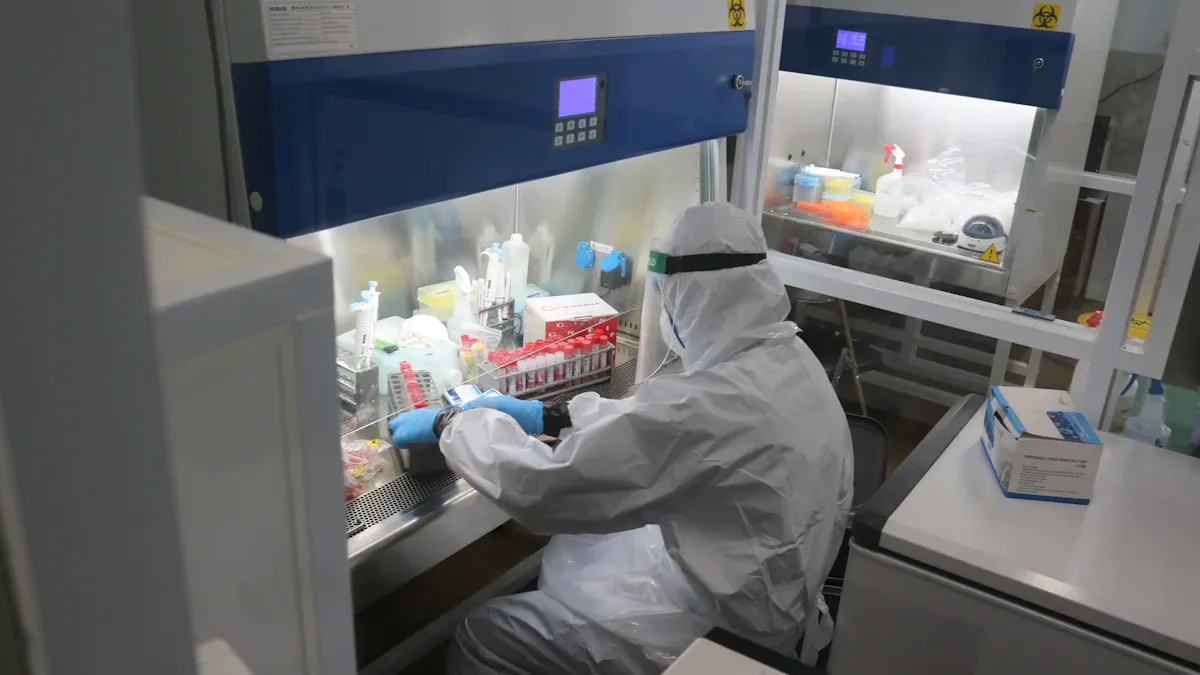
Image Source: unsplash
It is important to know how air moves in these hoods. Airflow means clean air moves inside the hood. This helps keep your workspace safe and stops contamination.
Horizontal laminar flow hoods push air from the back to the front. The air moves side to side along the work surface.
Vertical laminar flow hoods pull air from the top and send it straight down.
This difference changes how air covers your workspace. Horizontal airflow makes a smooth layer over the bench. Vertical airflow drops clean air from above and covers everything. Amber’s cleanroom designs use both types for safety and to stop contamination.
Contamination control is why you pick one hood or the other. Both horizontal and vertical laminar flow hoods use HEPA or ULPA filters. These filters clean the air and remove tiny particles.
Type of Hood | Airflow Direction | Applications |
|---|---|---|
Horizontal Flow | Back to front | Cell culture, tissue culture, sterile product filling |
Vertical Flow | Larger work areas, pharmaceutical applications |
Both hood types give strong contamination control. Horizontal flow hoods move air from the back to the front. This keeps sterile items safe. Vertical flow hoods send air from the top down. This works well for bigger equipment and spaces. Vertical hoods may be better for small particles because the air covers the whole surface.
Both hoods protect your samples from contamination. The difference comes from how the air moves and touches your work. Amber’s cleanroom solutions use good filters and smart airflow to stop cross-contamination and keep your workspace safe.
You want to keep yourself and your products safe. The difference between horizontal and vertical laminar flow hoods matters for protection. Horizontal airflow pushes clean air across the work surface. This keeps dirt and germs away from your products.
Vertical airflow sends clean air down from above. This helps protect you from contamination from your hands or body. The airflow acts like a shield between you and your work. Amber’s cleanroom hoods use strong airflow and good filters for the best protection.
Pick the hood that fits your safety needs. If you work with sensitive samples, horizontal flow may be best. If you need more protection for yourself, vertical flow is a good choice. Amber’s team can help you choose the right hood and make sure your workspace stays safe.
When you choose a laminar flow hood, you must think about the space in your room and how you will install the equipment. Horizontal and vertical laminar flow hoods have different needs. Each type fits best in certain places.
Horizontal Laminar Flow Hoods
These hoods need more depth because the air flows from the back to the front.
You must leave space behind the hood for the filter and fan.
The hood often sticks out from the wall, so you need a wide workbench or table.
You should not place the hood close to a wall or other equipment. This can block airflow and lower performance.
Vertical Laminar Flow Hoods
These hoods need more height because the air flows from the top down.
You can place them closer to walls or other equipment. The air comes from above, so side clearance is less important.
Vertical hoods fit well in rooms with limited floor space.
You can use them for taller equipment or larger items on the work surface.
Tip: Measure your workspace before you choose a hood. Make sure you have enough room for the hood, the filter, and safe airflow.
Here is a table to help you compare the space and installation needs:
Feature | Horizontal Hood | Vertical Hood |
|---|---|---|
Space Needed | More depth, less height | More height, less depth |
Placement | Away from walls and obstructions | Can be closer to walls |
Best For | Wide benches, open spaces | Small rooms, tall equipment |
Installation | Needs rear clearance | Needs overhead clearance |
Amber’s cleanroom experts can help you plan your space. You can ask for custom sizes or modular designs to fit your room. Amber uses high-quality materials and smart layouts to make installation easy and safe. You get a hood that fits your needs and keeps your workspace clean.
Horizontal laminar flow hoods help make your workspace clean. These hoods take air from the room and send it through a HEPA filter at the back. The clean air moves straight from the back to the front of the hood. This steady air goes across your work area and flows out toward you. The airflow pushes dust, germs, and other tiny things away from your samples or tools. You get a safe place to work that keeps your projects protected from outside contamination.
Amber’s horizontal laminar flow hoods have many helpful features. You can count on these hoods to keep your workspace free from contaminants. The design uses strong HEPA filters that catch very small particles in the air. The smooth airflow keeps your samples safe and lowers the chance of cross-contamination.
You also get good user safety. These hoods are great for jobs in pharmaceuticals and biotechnology. You can pick clean benches or laminar flow hoods depending on what you need and what you work with.
Here are some key benefits you will see:
Keeps your work area free from contaminants.
Makes your work safer during important tasks.
Helps you use careful techniques in labs and production.
Lets you see and reach your work surface easily.
Amber’s horizontal laminar flow hood is known for working well and being easy to use. You can trust it for everyday jobs and special tasks.
You can find horizontal laminar flow hoods in lots of places. These hoods work well in labs, factories, and cleanrooms. They help with many jobs that need a clean space. Here are some good uses for these hoods:
Growing plants and tissue culture
Making, putting together, or packing medical equipment
Making and building electronic equipment
Copying genetic material and genotyping
Making medicine and preparing IV bags
Processing or growing food
Controlling dental aerosols and doing lab work
Handling chemicals, solvents, and plastics
3D printing, laser work, welding, soldering, and grinding
Collecting mist, spray painting, and recovering data
You can also use horizontal laminar flow hoods with storage cabinets, glove boxes, and laboratory fume hoods. These hoods let you do many different jobs while keeping your workspace clean and safe.
When you choose a horizontal laminar flow hood, you need to think about a few important points. These hoods work well for many tasks, but you must match them to your workspace and needs. Here are some things you should consider before you decide:
Workspace Layout
You need enough room behind the hood for the filter and fan. The hood pushes air from the back to the front, so you cannot place it close to a wall. If you have a small room or limited bench space, you may find it hard to fit a horizontal hood.
Airflow Direction
The air flows toward you. This keeps your samples clean, but you must be careful with your movements. If you reach over your work, you can block the airflow and cause contamination. You should always work with your hands downstream of the airflow.
Operator Safety
Horizontal hoods protect your samples well. You need to remember that the airflow moves toward you. If you work with chemicals or powders, you must use extra safety steps. You should wear gloves, masks, or other protective gear to keep yourself safe.
Maintenance Needs
You must keep the filters clean and check them often. Dust and particles can build up over time. You should follow a regular cleaning schedule. Amber’s team can help you with filter changes and maintenance tips.
Tip: Always check the airflow with a test before you start your work. You can use a smoke test or a particle counter to make sure the hood works well.
Here is a table to help you review the main considerations:
Consideration | What You Need to Know |
|---|---|
Space Requirements | Needs extra depth behind the hood |
Airflow Management | Air moves toward you; avoid blocking the flow |
Safety Practices | Use PPE for chemicals or powders |
Maintenance | Clean and check filters regularly |
You should also think about the type of work you do. If you handle sterile samples, a horizontal hood gives you strong protection. If you need to work with large equipment or need more operator safety, you may want to look at other options. Amber offers expert advice to help you choose the best hood for your needs.
You can contact Amber’s team for help with planning, installation, and maintenance. Their experience in cleanroom solutions makes it easy for you to keep your workspace safe and efficient.
Vertical laminar flow hoods help keep your workspace clean. These hoods pull air from the room. The air goes through a HEPA filter at the top. Clean air moves straight down over your work area. This steady air pushes dust and germs away. You get a strong shield for your samples and tools. The air leaves at the bottom or front. It carries away any dirt or particles. You can trust this system to stop contamination.
Amber’s vertical laminar flow hoods have smart design features. These features make your work easier and safer. You can see them in the table below:
Feature | Description |
|---|---|
Adjustable Height | Work surface height ranges from 30” to 36”. Optional adjustable stand. |
Ergonomic Design | Sash has a 10-degree sloped angle for better comfort and usability. |
HEPA Filtration | Uses a HEPA supply filter with 99.99% efficiency for capturing particulates. |
You get many good things when you use these hoods:
You can reach the filter easily for cleaning or changing.
You can use tall equipment or big items without problems.
The extra vertical space helps you work safely.
You get better protection because air flows down between you and your samples.
Tip: If you use tall tools or want to save space, pick vertical laminar flow hoods for your cleanroom.
You can use vertical laminar flow hoods in lots of places. These hoods work well in labs, hospitals, and factories. You often see them in making medicine, building electronics, and research labs. They help you handle sterile samples and prepare medicines. You can also use them for food testing and plant research. They are good for packing medical devices. When you need a clean and safe workspace, vertical laminar flow hoods give you strong protection and flexibility.
When you choose vertical laminar flow hoods for your cleanroom, you need to think about a few important points. These hoods offer strong protection, but you must match them to your workspace and tasks. You want to get the best results, so consider these factors before you decide.
Space and Height Needs
Vertical laminar flow hoods require enough height in your room. The air comes down from the top, so you need space above the hood for the filter and fan. If your ceiling is low, you may have trouble fitting the hood. You should measure your room before you buy. Make sure you have enough overhead clearance.
Airflow Management
You must keep the airflow steady and smooth. If you place large equipment or tall items inside the hood, you can block the air. This can cause turbulence and lower the protection level. You should arrange your tools and samples so the air can move freely. Try not to stack items too high.
Work Surface Access
Vertical laminar flow hoods give you good protection, but you need to reach your work easily. Sometimes, the sash or shield at the front can limit your movement. You should check the design and make sure you can work comfortably. Amber offers adjustable stands and ergonomic features to help you.
Maintenance and Cleaning
You must keep the filters clean and change them when needed. Dust and particles can build up over time. Regular cleaning helps the hood work well. You should follow a schedule for filter checks and cleaning. Amber’s team can help you with maintenance tips and support.
Tip: Always test the airflow before you start your work. You can use a smoke test or a particle counter to check if the hood works as it should.
Here is a table to help you review the main considerations:
Consideration | What You Need to Know |
|---|---|
Space Requirements | Needs enough height above the hood |
Airflow Management | Avoid blocking air with tall equipment |
Work Surface Access | Check for comfortable reach and movement |
Maintenance | Clean and check filters regularly |
You should also think about the type of work you do. If you handle tall equipment or need extra protection, vertical laminar flow hoods work well. If your room has limited height, you may want to look at other options. Amber’s experts can help you plan your space and choose the right hood for your needs.
Vertical laminar flow hoods give you strong contamination control and operator safety. You get a clean workspace, but you must follow good practices for setup and maintenance. If you have questions, you can ask Amber’s team for advice and support.
It is important to know how airflow works in both hood types. Airflow helps keep your workspace clean. In a horizontal hood, air moves from the back to the front. This pushes dirt and germs away from your samples. In a vertical hood, air comes from the top and goes straight down. This pulls contamination away from your hands and face.
Here is a table that shows the differences:
Feature | Horizontal Laminar Flow Hood | Vertical Laminar Flow Hood |
|---|---|---|
Airflow direction | Rear-to-front | Top-to-bottom |
Contaminant removal path | Swept forward, away from rear filter | Pulled downward, through or around work surface |
Ideal applications | Electronics assembly, optical work, non-hazardous compounding | Tissue culture, IV prep, cleanroom packaging |
Operator protection | Limited (airflow passes over hands) | Moderate (airflow directed away from operator’s face) |
Work surface clearance | Full front access, no airflow obstruction | May require perforated or raised surface for exhaust |
Space requirements | Deeper footprint due to rear-mounted filter | More compact footprint |
Turbulence risk | Lower if operated in cleanroom with proper controls | Slightly higher risk if obstructed by hands or tools |
Horizontal hoods let particles leave the work area easily. Vertical hoods use air to make a shield between you and your samples. Both types help stop contamination. You should pick the hood that fits your work best.
Keeping yourself safe is very important in a cleanroom. Horizontal laminar flow hoods protect your samples well. The air moves toward you, so keep your hands downstream. This helps stop contamination. Vertical laminar flow hoods send air down from above. This keeps contamination away from your face and body.
Always use good safety habits. Wear gloves and masks if you use chemicals or powders. Make sure nothing blocks the airflow. Both hood types help keep you safe. Vertical hoods give extra protection because air moves away from your face.
You want your workspace to be easy and comfortable. Horizontal laminar flow hoods give you full access to the work surface. Air does not block your view or reach. You can move your hands and tools easily. Vertical laminar flow hoods may have a sash or shield at the front. Air comes down from the top, so arrange your tools to keep air moving.
Here is a table that compares ergonomic factors:
Ergonomic Factor | Vertical Units | Horizontal Units |
|---|---|---|
Operator Positioning Flexibility | High | Limited |
Direct Airflow Exposure | Minimal | Moderate to High |
Work Surface Accessibility | Good | Excellent |
Lighting Uniformity | Excellent | Good |
Visibility of Work Area | Good | Excellent |
Horizontal hoods give you great visibility and access. Vertical hoods let you change how you sit or stand more easily. Both types use airflow to keep your workspace clean. Pick the hood that matches your comfort and work style.
Tip: Test the airflow before you start working. This helps make sure your hood protects you and your samples from contamination.
When you choose a laminar flow hood, you need to think about space and cost. These two factors can change how well your cleanroom works and how much you spend.
Space Needs
Horizontal laminar flow hoods need more depth. You must leave room behind the hood for the filter and fan. The hood often sticks out from the wall, so you need a wide bench or table. If your room is small, you may find it hard to fit a horizontal hood.
Vertical laminar flow hoods need more height. The filter and fan sit at the top. You can place these hoods closer to walls or other equipment. Vertical hoods work well in rooms with limited floor space. You can use them for tall equipment or large items.
Here is a table to help you compare space needs:
Feature | Horizontal Hood | Vertical Hood |
|---|---|---|
Depth Needed | More | Less |
Height Needed | Less | More |
Placement | Away from walls | Near walls possible |
Best For | Wide benches | Small rooms, tall gear |
Cost Factors
You also need to think about cost. The price of a laminar flow hood depends on size, features, and installation. Horizontal hoods may cost more if you need a bigger bench or extra space. You may spend more on installation because you need to leave room behind the hood.
Vertical hoods can save you money if you have a small room. You may spend less on benches or tables. The installation can be easier because you do not need extra depth. You may pay more if you need a tall hood or special features.
Tip: Measure your workspace before you buy a hood. This helps you pick the right size and avoid extra costs.
Other Cost Points to Consider
Energy Use: Both hoods use fans and filters. You need to check how much power each hood uses. Amber’s hoods use energy-saving fans to help lower your bills.
Maintenance: You need to clean and change filters. Amber’s team can help you plan for these costs.
Customization: If you need a special size or design, Amber offers modular options. Custom hoods may cost more, but they fit your space better.
Amber’s Expertise
Amber’s cleanroom experts help you plan your space and budget. You can ask for advice on hood size, placement, and cost. Amber uses high-quality materials and smart designs to help you save space and money. You get a hood that fits your needs and keeps your workspace clean.
You need to think carefully before you choose a laminar flow hood for your cleanroom. The right choice keeps your workspace safe and helps you work better. Here are the main things you should look at:
Application Requirements
Decide what you will do in your cleanroom. If you handle powders, chemicals, or delicate samples, you need a hood that matches your work.
Safety and Containment Level
Check how much protection you need. Some jobs need extra safety features to keep you and your products safe.
Airflow and Filtration
Look at how the air moves in the hood. Make sure the airflow type fits your application. HEPA filters help keep the air clean.
Size and Capacity
Make sure the hood is big enough for your tools and samples. You need enough space to work without blocking the airflow.
Ergonomics
Choose a hood that feels comfortable to use. Good design helps you work longer without getting tired.
Certification and Compliance
Check if the hood meets industry standards. This helps you follow rules and keep your workspace safe.
Maintenance and Service
Pick a hood that is easy to clean and maintain. You want to change filters and check parts without trouble.
Budget
Think about the cost. Look at both the price to buy and the cost to keep the hood working well.
Regulatory Compliance
Make sure your hood follows all the rules for your industry.
Tip: Write down your needs before you choose. This helps you find the best hood for your cleanroom.
Amber gives you many choices for cleanroom hoods. You can pick a vertical or horizontal laminar flow hood. Both types use strong HEPA filters and smart airflow designs. Amber lets you customize your hood to fit your space and work.
Airflow Direction | Customization Options | |
|---|---|---|
Vertical Laminar Flow Hood | Downward | Yes |
Horizontal Laminar Flow Hood | Horizontal | Yes |
You can ask Amber for special sizes, extra features, or modular designs. If you need a hood for a small room, Amber can make it fit. If you need more space for tall equipment, Amber can adjust the design. You get help from Amber’s team for planning, installation, and after-sales support.
Amber’s cleanroom hoods use high-quality materials like stainless steel. You get strong, safe, and easy-to-clean products. Amber’s modular cleanrooms work for hospitals, labs, factories, and more. You can trust Amber to help you decide which hood configuration is right for your needs.
Note: Amber’s experts help you choose, install, and maintain your cleanroom hood. You get support at every step.
You want to avoid problems when you pick a laminar flow hood. Here are some mistakes people often make:
Choosing a horizontal hood for large or hazardous materials. This can lead to poor protection.
Using a vertical hood for small samples when you need minimal turbulence. This may not give you the best contamination control.
Placing large items inside the hood. These can block airflow and cause contamination.
Forgetting about maintenance. Some hoods need to be moved for cleaning, which can be hard.
Not checking how airflow affects you. Air can blow on you and spread contamination if you do not set up the hood right.
Alert: Always check your workspace and needs before you buy. Ask for advice if you are not sure.
You can avoid these mistakes by planning ahead. Think about your work, your space, and your safety. Amber’s team can help you make the right choice and keep your cleanroom safe.

Image Source: pexels
You work in a field where safety is very important. In pharmaceuticals and biotech, tiny particles can ruin your products or hurt patients. Amber cleanroom hoods help you follow strict rules for air quality. These hoods make a safe space that keeps dust and germs away from your products.
Amber makes its cleanroom hoods to meet high industry standards. You can trust these hoods to help you follow all the rules. This helps keep patients safe and your products strong. When you use Amber’s Class 100 laminar flow hoods, you get a clean place for drug packaging and testing. This setup lowers the chance of contamination and helps you make good products every time.
Key uses in this field:
Drug formulation and compounding
Sterility testing and quality control
Vaccine and biologics production
Packaging of sterile products
Tip: Always check your hood’s airflow and filter before you start important work. This helps keep your workspace safe and follows the rules.
You see cleanroom hoods in hospitals and places where medical devices are made. These areas need to be clean to protect patients and workers. Amber cleanroom hoods help you mix medicines, prepare IVs, and build medical devices without worrying about germs.
You use these hoods in operating rooms, ICUs, and labs. They help keep bacteria and dust away from wounds, tools, and equipment. Amber’s hoods use strong HEPA filters to catch harmful particles. You can trust them for daily hospital jobs and for making things like catheters and surgical tools.
Common applications:
Compounding pharmacies
Surgical suite preparation
Device assembly and packaging
Sterile storage and transfer
Note: Amber’s modular designs let you fit cleanroom hoods into many hospital spaces, even if your room is small.
You need a clean space when you build electronics or work with semiconductors. Even a tiny bit of dust can break a microchip or make a device stop working. Amber cleanroom hoods give you clean air for these careful jobs.
You use these hoods to put together circuit boards, test microchips, and make sensors. The laminar airflow keeps dust and static away from your work. You can also use Amber hoods for research in electronics, where you need everything to be perfect.
Typical uses:
Microchip fabrication
PCB assembly and inspection
Sensor and display manufacturing
Clean storage for sensitive parts
Industry | Key Benefits of Amber Hoods |
|---|---|
Pharmaceuticals | Regulatory compliance, sterile workspace |
Hospitals | Patient safety, device cleanliness |
Electronics | Dust-free assembly, static control |
Amber’s cleanroom hoods help you follow industry rules and keep your work safe and strong.
You must keep your workspace clean when you work with food, drinks, or plants. Small bits of dust or germs can ruin your products or make people sick. Amber cleanroom hoods help control the air and stop contamination.
Laminar flow hoods are used in many food jobs. These hoods protect ingredients when you mix, pack, or test them. Beverage factories use these hoods to keep drinks pure. In farming, you need clean air for plant tissue culture, sorting seeds, and doing research.
Key benefits of Amber cleanroom hoods in food, beverage, and agriculture:
You stop bacteria and mold from getting into food and drinks.
You keep seeds and plants safe from dust and bugs.
You follow safety rules for handling and packing food.
You help products last longer and stay good.
Tip: Always check the airflow and filter before you begin. Clean air helps you stop spoilage and recalls.
Amber hoods are found in many places:
Labs that test food
Lines that bottle milk and drinks
Rooms that pack snacks and meals
Labs for sorting seeds and studying plants
Greenhouses for growing plant tissue
Here is a table that shows how Amber hoods help with different jobs:
Application | How Amber Hoods Help |
|---|---|
Food packaging | Keeps dust and germs away |
Beverage bottling | Protects liquids from contamination |
Plant tissue culture | Maintains sterile growth conditions |
Seed sorting | Prevents cross-contamination |
Quality control labs | Ensures accurate test results |
You must follow strict rules in food and farming work. Amber cleanroom hoods help you meet ISO and food safety standards. You get strong HEPA filters and surfaces that are easy to clean. Amber can make hoods in special sizes to fit your workspace.
Note: Clean air matters for your business. You protect your products and your name when you use Amber cleanroom hoods.
You want to pick the right laminar flow hood for your room. This table helps you see the main differences quickly. Use it to help you decide:
Feature | Vertical Laminar Flow Hood | Horizontal Laminar Flow Hood |
|---|---|---|
Fan & Filter Location | Ceiling (top of the hood) | Rear (extra depth at the back) |
Airflow Direction | Downward (top to bottom) | Horizontal (back to front) |
Turbulence | More turbulence possible | Less turbulence, smoother airflow |
Work Surface Height | Adjustable for large equipment | Lower working height |
Cross-Contamination | Less between samples on the surface | Less risk from hands and gloves |
Best for Powders | Solder or fine powders | Harmless powders and odors |
Contamination Control | Good, but not as strict as horizontal | Very strict, all air moves away from sample |
Space Needed | Less floor space, not deep | More floor space, deeper hood |
User Safety | Air does not blow toward your face | Air may blow toward your face |
Tip: If you need to use tall tools or work with fine powders, a vertical hood gives you more options. If you want the best protection from contamination, a horizontal hood keeps your samples safer.
Vertical hoods send air down from the top. You get more room for tall things and less chance of mixing up samples.
Horizontal hoods push air from the back to the front. You get smoother air and strong protection, but air might blow toward your face.
Checklist for Choosing:
Do you need space for big or tall tools?
Do you work with fine powders or solder?
Is keeping things super clean most important?
How much floor space do you have?
You can use this table and checklist to find the best hood for your needs. Amber’s team can help you look at your room and choose the right hood for your cleanroom.
You have to pick the right laminar flow hood for your room. Horizontal hoods move air smoothly and keep samples safe. Vertical hoods help you save space and protect you from fumes. Look at the table below to see the differences:
Hood Type | Best For | Key Point |
|---|---|---|
Horizontal | Sterile equipment, labs | Less turbulence, more space |
Vertical | Powders, solvents | Safer for operator, easy filter |
Amber’s team can help you find the best hood for your job. You can ask them for advice and special cleanroom setups.
You see horizontal hoods push air from the back to the front. Vertical hoods send air down from the top. This changes how air protects your work and keeps your workspace clean.
You should use a vertical laminar flow hood for powders. The downward airflow helps keep particles away from your face and workspace. This gives you better safety and control.
You need to check HEPA filters every six to twelve months. Replace them when you see reduced airflow or higher particle counts. Amber’s team can help you set a maintenance schedule.
You can ask Amber for custom sizes and modular designs. This helps you fit the hood into your workspace and meet your specific needs. Customization makes your cleanroom more efficient.
Laminar flow hoods do not protect you from chemical fumes. You need a fume hood for that purpose. Laminar flow hoods keep particles and germs away, but they do not filter out harmful gases.
You find Amber’s hoods in hospitals, pharmaceutical labs, electronics factories, food processing plants, and research centers. These hoods help keep products and workspaces clean and safe.
You can use a smoke test or a particle counter to check airflow. Make sure air moves smoothly and keeps your workspace clean. Amber’s experts can show you how to test your hood.
You can clean Amber’s hoods easily. The design uses stainless steel and smooth surfaces. You wipe down the work area and change filters as needed. Regular cleaning keeps your hood working well.
