
- All
- Product Name
- Product Keyword
- Product Model
- Product Summary
- Product Description
- Multi Field Search

Views: 0 Author: Site Editor Publish Time: 2025-08-15 Origin: Site


Clean room design plays a critical role in industries where contamination control is essential. From pharmaceuticals to electronics, the right cleanroom design ensures optimal product quality and compliance with strict regulations.
But what exactly sets softwall cleanrooms apart from hardwall cleanrooms? While both types serve to maintain a controlled environment, they differ significantly in structure, cost, and functionality.
In this article, we’ll explore the key differences between softwall and hardwall cleanrooms. You’ll learn about their unique features, benefits, and the factors that can help you decide which is best suited for your industry.
A cleanroom is a controlled environment where airborne particles, temperature, and humidity are carefully managed to ensure product quality and compliance. These environments are crucial in industries like pharmaceuticals, biotechnology, and electronics, where even the smallest contamination can impact product integrity.
Air filtration is the backbone of any cleanroom design. HEPA (High-Efficiency Particulate Air) and ULPA (Ultra-Low Penetration Air) filters remove particles as small as 0.3 microns, keeping the air free from contaminants.
Temperature and humidity must be closely monitored and regulated. Cleanrooms often require precise control to ensure that environmental conditions don't affect the quality of sensitive materials or equipment.
Cleanrooms are often built using modular construction, which allows for flexible, scalable designs. This approach ensures that the space can be customized to meet specific requirements and can be expanded or reconfigured as needed.
ISO cleanliness classifications define the level of particle contamination allowed in a cleanroom. These standards range from ISO Class 1 (the cleanest) to ISO Class 9, and the design must meet specific requirements based on the classification needed for the industry.
Softwall cleanrooms are controlled environments constructed using flexible vinyl curtains that provide an effective barrier for contamination. These cleanrooms are often supported by aluminum or steel frames, making them easy to assemble and adjust according to specific needs.
Cost-Effective Construction: Softwall cleanrooms are more affordable than their hardwall counterparts, making them ideal for projects with budget constraints.
Flexibility and Ease of Installation: The modular design allows for quick assembly and easy modifications, offering a highly adaptable solution.
Quick Deployment and Reconfiguration: Softwall cleanrooms can be installed quickly, and their layout can be adjusted as needed, which is particularly useful in dynamic environments.
Ideal for Temporary Applications: These cleanrooms are perfect for short-term projects or temporary installations, offering an efficient, cost-effective solution for industries that need flexibility.
Less Control Over Environmental Factors: Compared to hardwall cleanrooms, softwall designs offer less control over air quality, temperature, and humidity.
Maintenance Challenges: Vinyl materials can accumulate dust and contaminants, requiring more frequent cleaning and maintenance.
Not Suitable for High ISO Classifications: Softwall cleanrooms are typically less effective at meeting the strict cleanliness standards required for high ISO classifications.
Electronics Assembly: Softwall cleanrooms provide the necessary containment for dust and contaminants in electronics manufacturing.
Research and Development (R&D): Flexible and adaptable cleanrooms are ideal for labs that need to adjust their setups frequently.
Packaging and Less Strict Manufacturing Processes: Industries that do not require stringent contamination control can benefit from the cost-effective nature of softwall cleanrooms.
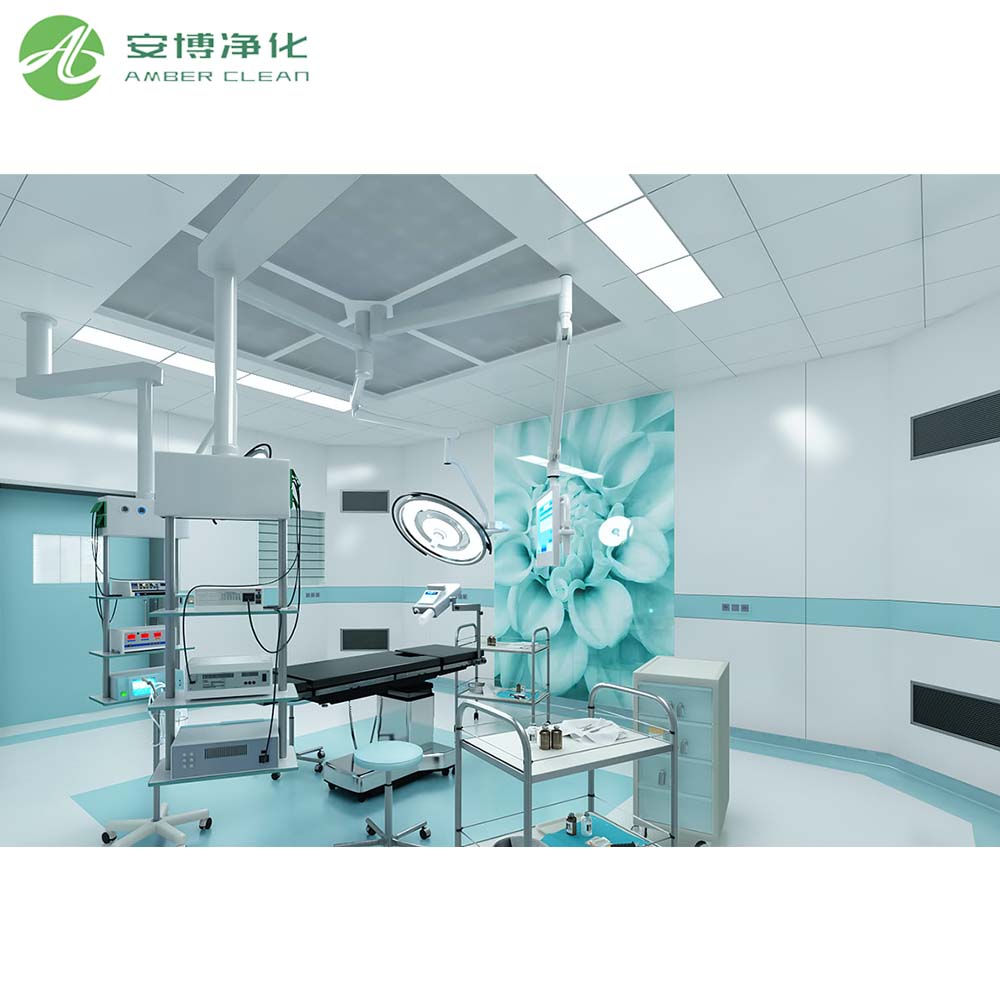
Hardwall cleanrooms are rigid, controlled environments made from solid materials like steel, acrylic, or HDPE (High-Density Polyethylene) panels. Unlike softwall cleanrooms, which use flexible vinyl curtains, hardwall cleanrooms feature sturdy wall panels that provide a higher level of contamination control and structural integrity.
Durability and Long-Term Stability: The solid construction of hardwall cleanrooms ensures they maintain their structural integrity over time, making them ideal for long-term use.
Higher Cleanliness Standards and Better Particle Control: Rigid panels prevent particle infiltration, enabling stricter contamination control, which is essential for industries with high cleanliness requirements.
Ability to Incorporate Advanced HVAC Systems: Hardwall cleanrooms can accommodate advanced heating, ventilation, and air conditioning (HVAC) systems, ensuring precise environmental control.
More Effective Control Over Temperature, Humidity, and Airflow: With solid walls and advanced systems, hardwall cleanrooms maintain consistent and controlled conditions, which is crucial for sensitive processes.
Higher Cost Due to More Rigid Construction: The materials used for hardwall cleanrooms are more expensive, increasing initial installation costs.
More Time-Consuming and Complex Installation: Hardwall cleanrooms take longer to install due to their modular construction and the integration of advanced systems.
Less Flexible Compared to Softwall Cleanrooms: Once installed, hardwall cleanrooms are harder to reconfigure and expand compared to softwall alternatives.
Pharmaceuticals and Biotechnology: Hardwall cleanrooms are ideal for pharmaceutical production, where strict contamination control and environmental stability are critical.
Aerospace and Semiconductor Manufacturing: These industries require precise control over air quality, temperature, and humidity, making hardwall cleanrooms the preferred choice.
Medical Device Production and Testing: Hardwall cleanrooms offer the level of cleanliness and stability required for the production and testing of medical devices.
When considering clean room design, cost is a crucial factor. Softwall cleanrooms typically have a lower initial construction cost due to their simpler materials and faster installation. In contrast, hardwall cleanrooms, made from rigid materials like steel or acrylic, come with higher upfront costs.
However, hardwall cleanrooms can provide long-term value with their durability and ability to handle advanced systems. Maintenance costs for hardwall designs are also generally lower since their rigid walls are less prone to damage. On the other hand, softwall cleanrooms may require more frequent upkeep due to the wear and tear of flexible materials.
The choice between flexibility and durability depends on your specific needs. If you need a cleanroom that can be quickly set up, modified, or relocated, softwall cleanrooms are the better option. Their modular design offers easy reconfiguration, making them ideal for temporary projects or evolving requirements.
For applications where durability and stringent environmental control are essential, hardwall cleanrooms provide the required stability. They are more suitable for industries with strict regulations and long-term operational needs, where the control of contamination and environmental factors is paramount.
When it comes to cleanliness, hardwall cleanrooms have the edge. Their solid, non-porous surfaces prevent the infiltration of particles, making them ideal for environments where even the smallest contaminants can cause significant issues. They also provide better control over particle levels and are more effective in meeting high ISO cleanliness classifications.
Softwall cleanrooms, while effective for less stringent applications, may not offer the same level of contamination control. The flexible materials used can accumulate dust and require more frequent cleaning. This makes softwall cleanrooms more suitable for industries where particle control is not as critical.
Softwall cleanrooms shine in terms of deployment speed. They can be installed in just a few hours, making them an excellent choice when you need a cleanroom quickly. They also have a more compact design, allowing them to fit into smaller spaces, which can be beneficial for industries with limited room.
On the other hand, hardwall cleanrooms take longer to install due to their more complex structure and integration of advanced systems. However, they provide more flexibility for long-term installations, with the capability to handle larger equipment and more extensive space requirements.
When selecting a clean room design, several key factors need to be considered to ensure the chosen solution meets your specific needs. The right design will depend on various aspects, including your application, budget, space constraints, and project timeline.
Different industries have varying cleanliness standards and environmental control needs. For instance, pharmaceutical manufacturing requires high levels of contamination control, making hardwall cleanrooms the ideal choice. On the other hand, industries like electronics assembly may not need such stringent controls, making softwall cleanrooms more suitable.
Your budget will influence the decision between a short-term and long-term investment. Softwall cleanrooms are often more affordable upfront, making them ideal for short-term projects. However, hardwall cleanrooms, while more expensive, can offer long-term value due to their durability and efficiency.
Space is a critical factor in clean room design. Softwall cleanrooms can fit into smaller areas, making them ideal for projects with limited space. Hardwall cleanrooms, while more rigid in design, may require larger spaces but provide a more stable, long-term solution.
If you need a cleanroom quickly, softwall cleanrooms can be deployed in a matter of hours. They are easily adjustable and can be reconfigured as your needs change. However, hardwall cleanrooms take longer to set up but provide long-term stability and are better suited for industries requiring consistent environmental conditions.
What level of contamination control do I need?
Will my project require future expansion or reconfiguration?
How critical is rapid deployment to my timeline?
When choosing between softwall and hardwall cleanrooms, it’s essential to consider your specific needs. Softwall cleanrooms are cost-effective and flexible, ideal for short-term or less regulated applications. In contrast, hardwall cleanrooms provide higher durability, better particle control, and are suitable for industries with strict cleanliness standards.
Ultimately, the right clean room design balances cost, flexibility, cleanliness, and long-term requirements. For reliable, high-quality cleanroom solutions, Amber’s products offer the perfect blend of performance and value, tailored to meet your needs.
Yes, softwall cleanrooms offer high flexibility for reconfiguration due to their modular construction. These cleanrooms can be easily expanded or reconfigured, making them ideal for industries with changing needs. In contrast, hardwall cleanrooms, though more durable, are less flexible and require more time and resources to reconfigure.
Softwall cleanrooms are best suited for industries with moderate contamination control requirements, such as electronics assembly and light R&D. For industries like pharmaceuticals, biotechnology, and aerospace, where high cleanliness standards are essential, hardwall cleanrooms are more appropriate due to their superior air filtration systems and ability to maintain strict ISO 14644 classifications.
Softwall cleanrooms are quick and easy to install, requiring minimal tools and time. Installation can be completed in a few hours, offering flexibility for projects with tight timelines. Hardwall cleanrooms, while more complex and requiring more time, provide a stable structure with advanced air filtration, temperature, humidity control, and pressure differential systems for industries needing stricter environmental controls.
