
- All
- Product Name
- Product Keyword
- Product Model
- Product Summary
- Product Description
- Multi Field Search

Views: 0 Author: Site Editor Publish Time: 2025-08-14 Origin: Site


Have you ever wondered how clean rooms maintain such strict environmental conditions? The answer lies in an effective HVAC system. A well-designed clean room HVAC system ensures optimal air quality, temperature, and humidity levels, which are crucial for industries like pharmaceuticals, biotechnology, and semiconductor manufacturing.
In this post, we’ll discuss the key components that make up an effective clean room HVAC system and explore the role of clean room design in maintaining stringent environmental controls. You’ll learn how HVAC systems play a critical role in ensuring compliance with standards like ISO 14644-1 and the overall impact on product quality, employee safety, and operational efficiency.
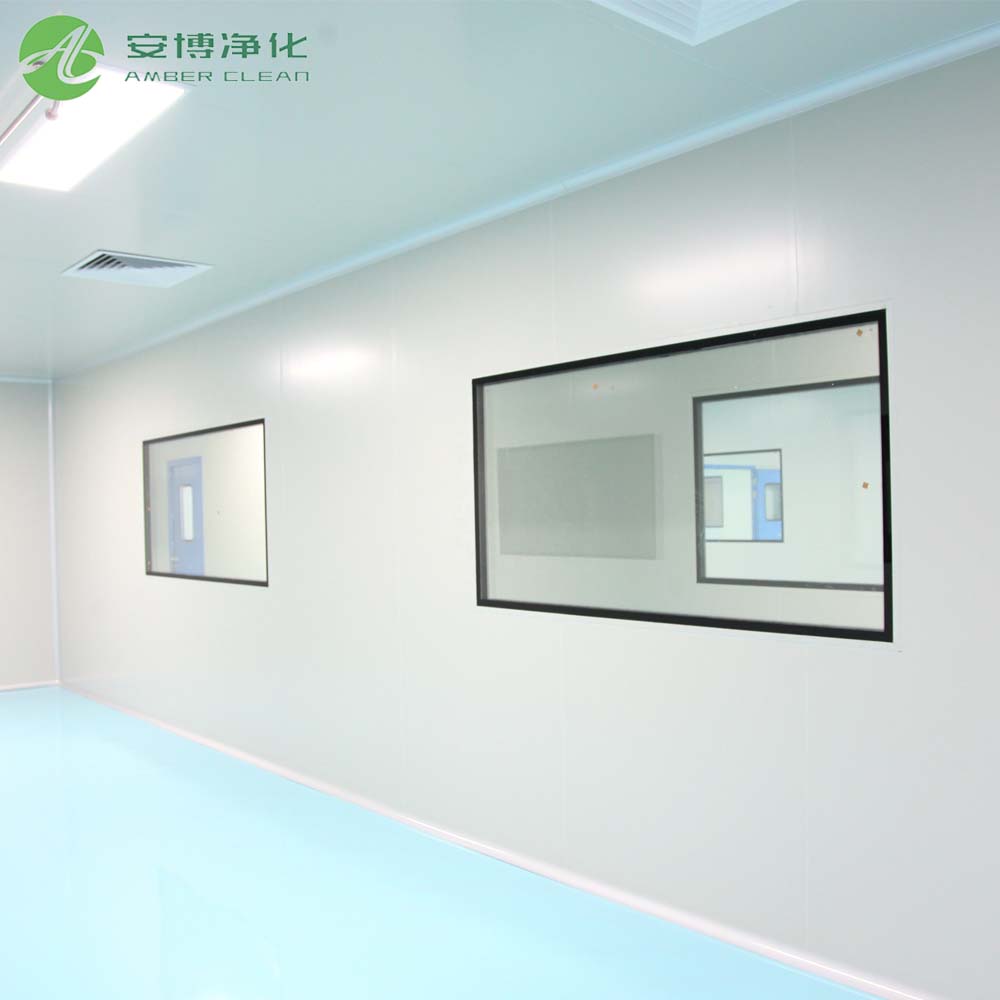
Air filtration is essential in maintaining a contamination-free environment. HEPA (High-Efficiency Particulate Air) and ULPA (Ultra-Low Penetration Air) filters are commonly used in cleanrooms to trap particles as small as 0.3 microns. These filters ensure that airborne contaminants are effectively removed from the air, contributing to a clean room design that meets stringent cleanliness standards.
HEPA filters are among the most reliable filtration systems for clean rooms, designed to capture over 99.97% of airborne particles. ULPA filters go one step further, capturing particles as small as 0.12 microns, making them essential in environments where particle contamination must be minimized even further, such as in pharmaceutical or semiconductor clean rooms.
Filtration systems are strategically placed within HVAC systems to ensure continuous air circulation. Their role in clean room design is crucial for preventing particle contamination, especially in sensitive industries like pharmaceuticals and semiconductor manufacturing. By filtering out contaminants, these systems maintain the integrity of products and processes.
Air filtration works in tandem with other clean room elements like airflow control, pressure regulation, and humidity control to create a balanced, contaminant-free environment. The location and type of filters used depend on the clean room's classification and specific industry requirements.
Airflow control ensures that clean air is distributed evenly throughout the room. Laminar flow, where air moves in parallel layers, minimizes the risk of contaminant buildup. Laminar flow is commonly used in critical areas where contaminants must be kept to an absolute minimum. Non-laminar flow systems, while less efficient, can also play a role in less controlled environments where particle concentrations are less stringent.
Effective airflow control not only helps minimize contamination risks but also ensures uniform distribution of temperature and humidity, further contributing to the clean room’s controlled environment.
Pressure control is another essential component of clean room design. Positive pressure keeps the cleanroom environment sealed off from contaminants by pushing air out. Negative pressure is used in specific areas to prevent harmful particles from escaping. Both systems are vital in the clean room design, ensuring contamination is controlled both inside and outside the room.
Positive pressure systems are often used in clean rooms that require the highest levels of cleanliness, such as in pharmaceutical production or hospital operating rooms. Negative pressure is more commonly used in containment areas, such as laboratories handling hazardous or biohazardous materials, where it is crucial to prevent contaminants from leaving the space.
HVAC systems regulate temperature within tight limits, crucial for processes that require consistent environmental conditions. Heating and cooling systems work in tandem to maintain temperature stability, ensuring that sensitive operations are not compromised by temperature fluctuations.
Maintaining an optimal temperature is especially important in industries like pharmaceuticals, biotechnology, and semiconductor manufacturing. Temperature-sensitive materials or equipment may degrade if exposed to even slight temperature variations. A properly designed HVAC system will ensure that the clean room environment stays within specified temperature ranges, optimizing product quality and safety.
Humidity plays a significant role in contamination control and microbial growth. HVAC systems include humidifiers and dehumidifiers to keep moisture levels within optimal ranges. This helps prevent the buildup of microorganisms and particles, ensuring the cleanroom meets design specifications.
High humidity levels can cause condensation, which can compromise both product quality and the structural integrity of sensitive equipment. Low humidity, on the other hand, can lead to static buildup, which can be a hazard in environments dealing with sensitive electronics. The HVAC system ensures that humidity levels remain balanced, preventing these issues and maintaining clean room design integrity.
Cleanrooms require frequent air exchanges to maintain high air quality. Ventilation systems bring in fresh air and exhaust contaminated air, ensuring that the room’s air quality remains pristine. This process is essential for maintaining compliance with cleanliness standards.
High air change rates (ACH) are necessary in cleanrooms to ensure contaminants are continuously removed from the environment. The required ACH varies depending on the clean room’s classification, with more stringent requirements for higher-class rooms. A typical clean room may require anywhere from 20 to 250 air changes per hour, depending on the level of cleanliness needed.
Air Changes Per Hour (ACH) refers to the number of times the air in a room is replaced. Higher ACH rates are required in more sterile environments. HVAC systems are designed to meet these specific ACH levels, which directly affect the overall cleanliness and efficiency of the cleanroom.
Maintaining proper ACH levels ensures that contaminants are consistently removed from the room, preventing buildup and maintaining air purity. A well-maintained HVAC system, capable of meeting the required ACH, ensures long-term clean room efficiency.
The HVAC system’s layout must complement the clean room design. Proper integration ensures that air is evenly distributed throughout the room. It also prevents issues like air stagnation or inconsistent airflow, which can lead to contamination risks. The system must be tailored to fit the room's size, shape, and specific functions, such as those required in pharmaceutical or semiconductor manufacturing.
Clean room applications often have unique needs. For instance, semiconductor clean rooms require ultra-low particle control, while pharmaceutical labs may need strict temperature and humidity regulation. Custom HVAC solutions are essential for meeting these specific demands. Whether it’s a biotech clean room or a pharmaceutical facility, the HVAC system design must be optimized to handle the specialized conditions each sector requires.
Barrier systems, such as air locks, pass-throughs, and HEPA-filtered zones, work in conjunction with HVAC systems to maintain clean room standards. These barriers control contaminant access, ensuring that clean air flows into the room while preventing external particles from entering. By integrating these features, clean room designs can ensure that contamination risks are minimized.
Sensors and monitoring tools are key to maintaining HVAC performance. These devices track temperature, humidity, and pressure levels in real-time, helping ensure the environment stays within required specifications. Monitoring systems alert operators to any deviations, allowing for quick corrective actions before issues arise. This real-time oversight is critical in maintaining the integrity of the clean room environment.
Regular maintenance is essential for keeping the HVAC system in optimal condition. Key practices include filter changes, calibration of sensors, and system inspections to ensure everything functions as designed. These tasks help avoid system malfunctions that could jeopardize the clean room environment. Maintenance should be scheduled regularly to maintain both system efficiency and compliance with cleanliness standards.
The size and shape of a clean room can greatly impact HVAC system design. In smaller, complex spaces, there is less room to install large equipment. This requires more efficient designs and creative solutions. HVAC systems must be compact, but still capable of maintaining proper airflow and filtration. The design needs to maximize space while ensuring the clean room operates at optimal conditions.
Clean room designs must comply with strict standards, such as ISO 14644-1. These regulations outline the required levels of cleanliness, air changes per hour, and filtration efficiency. HVAC systems must meet these guidelines to ensure the room stays within the designated classification. Understanding these requirements is essential in designing systems that not only function effectively but also adhere to industry regulations and certifications.
Clean room HVAC systems consume significant amounts of energy, so balancing air quality control with energy efficiency is crucial. Designing systems to be energy-efficient without compromising performance requires careful planning. Solutions like variable-speed fans, energy recovery ventilation, and efficient insulation can reduce energy consumption. Additionally, smart controls and sensors help optimize HVAC operation, ensuring that systems run efficiently while meeting clean room design standards.
In summary, an effective clean room HVAC system relies on key components like air filtration, airflow control, temperature, and humidity regulation. These systems work together to ensure the room stays contaminant-free, following strict clean room design standards. A well-designed HVAC system not only meets immediate environmental needs but also provides long-term benefits, improving air quality and energy efficiency. Amber's advanced HVAC solutions ensure that your clean room design operates efficiently, maintaining high standards while saving energy and costs.
HEPA filters are crucial in cleanroom HVAC systems, as they remove particles as small as 0.3 microns, ensuring high air quality and cleanliness. These filters are key components of the cleanroom air filtration system, maintaining strict cleanliness standards.
Routine maintenance for cleanroom HVAC systems includes filter changes, sensor calibrations, and inspections, typically every 6-12 months. Regular maintenance ensures the system operates efficiently, meeting cleanroom HVAC system design principles and compliance standards.
Positive pressure is essential for preventing contaminants from entering the cleanroom environment. By ensuring air flows from cleaner areas to less clean areas, cleanroom pressure differential control helps maintain the integrity of the cleanroom.
