
- All
- Product Name
- Product Keyword
- Product Model
- Product Summary
- Product Description
- Multi Field Search

Views: 180 Author: Site Editor Publish Time: 2025-08-15 Origin: Site


In highly controlled environments like pharmaceutical labs, semiconductor manufacturing plants, or biotechnology cleanrooms, every detail counts—even the door. While it may seem trivial to compare a cleanroom door with a regular industrial door, the differences are vast and mission-critical. In this article, we’ll explore the structural, functional, and performance-based differences between cleanroom doors and traditional industrial doors.
Cleanrooms are meticulously controlled environments designed to minimize the introduction, generation, and retention of airborne particles. These environments also regulate parameters like humidity, temperature, airflow, and pressure to protect sensitive processes or products. Given these standards, cleanroom doors are not just entry points—they are engineered components of the cleanroom ecosystem.
Unlike ordinary environments, cleanrooms are classified by ISO standards (ranging from ISO Class 1 to ISO Class 9), with ISO 1 being the most sterile. To maintain these cleanliness levels, doors must seal tightly, resist contamination, and facilitate controlled access. This isn’t just about hygiene—it’s about ensuring zero compromise in product safety, research accuracy, and process control.
Regular industrial doors, by contrast, are designed for broader utility. They prioritize durability, load-bearing capabilities, and ease of access. Although robust, they do not inherently meet the air-tightness, cleanability, or pressure integrity standards needed in sterile environments.
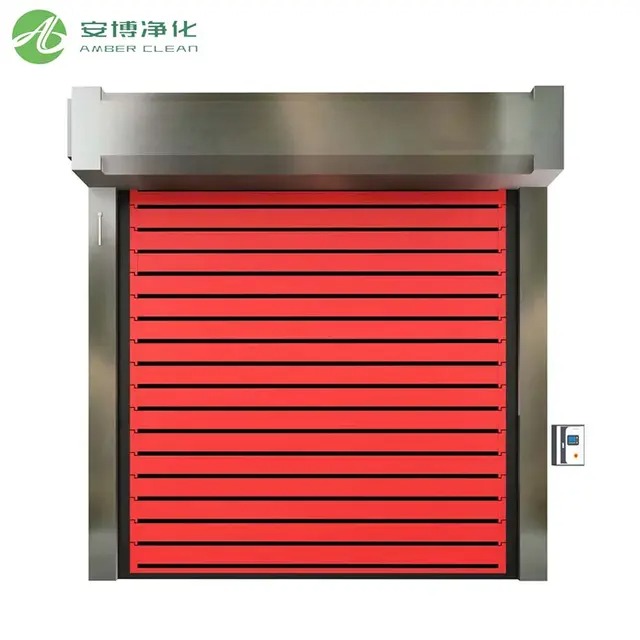
The materials and finishes used in cleanroom doors are perhaps the most immediately noticeable difference. Cleanroom doors are typically made from stainless steel, high-pressure laminate, or powder-coated galvanized steel. These materials offer non-porous surfaces that resist bacterial growth and are easy to sterilize.
More importantly, cleanroom doors avoid crevices, recesses, or protrusions that can harbor contaminants. Seamless edges, flush handles, and smooth corners make cleaning effortless and compliant with cleanroom standards.
On the flip side, regular industrial doors may be made of wood-core composites, aluminum, steel, or even reinforced plastics. While durable and suitable for rugged use, they often contain seams, textures, and hardware not suited for cleanroom sanitation protocols. Their finishes may not be resistant to strong chemical cleaners, leading to surface degradation over time.
Cleanrooms rely heavily on positive or negative pressure differentials to prevent contamination. Positive pressure cleanrooms (like those in pharmaceutical or electronic industries) ensure that clean air flows out of the room, not into it. Cleanroom doors, therefore, must create near-perfect seals to maintain pressure gradients.
Many cleanroom doors include features such as gasket seals, flush-mounted door closers, and hermetically sealed hinges. These design elements reduce air leakage rates significantly—often achieving air leakage as low as 3 m³/h at 50 Pa or better.
In contrast, industrial doors are not designed with this level of air integrity. A regular steel or sectional door may have visible gaps around the frame, inconsistent sealing along thresholds, and higher air permeability rates. In cleanroom environments, this could cause pressure imbalance, compromised air cleanliness, and even microbial infiltration.
Both cleanroom and industrial doors can be either manual or automatic, but the purpose behind automation differs significantly.
Cleanroom doors often use sensor-based automation to support hands-free operation—minimizing human contact and reducing cross-contamination. Some include interlocking systems (also called airlocks), preventing simultaneous opening of adjacent doors. This is crucial in maintaining cleanroom zoning and controlling particulate migration between rooms.
These automation systems are typically integrated with Building Management Systems (BMS) or Environmental Monitoring Systems (EMS) for real-time access tracking and pressure control.
Meanwhile, industrial doors tend to focus on operational efficiency—supporting rapid opening speeds, frequent cycling, and rugged operation in logistics or production environments. Though fast, these doors don't typically integrate interlock systems or particulate management technologies.
Cleanroom doors must be tested for more than just cleanliness. In many industries, they must also meet fire resistance standards (such as UL or EN certifications), resist aggressive cleaning agents like alcohol or hydrogen peroxide, and withstand frequent use without delamination or corrosion.
Impact resistance is another important factor. Cleanroom doors are often exposed to frequent trolley or cart traffic. As such, many are reinforced internally with steel cores and protected by kick plates or impact buffers, all while preserving a clean, sealed outer surface.
Regular industrial doors may prioritize thermal insulation, acoustic reduction, or mechanical robustness. But these properties don't necessarily translate into compatibility with cleanroom-specific hazards. Industrial doors may not be rated for cleanroom-compatible fire safety or chemical durability.
Cleanroom doors come in a variety of designs to suit different classifications and workflows:
| Door Type | Description | Typical Application |
|---|---|---|
| Swing Door | Hinged, with gaskets for air-tight seal | ISO 6–8 cleanrooms |
| Sliding Door | Wall-mounted or floor-supported, ideal for space-saving | ISO 5–7 clean zones |
| Hermetically Sealed Door | Uses special seals and pressure locks for airtight closure | ISO 1–4 critical environments |
| Interlocked Door System | Electronically linked to prevent simultaneous opening | Entry to pharmaceutical, biotech, or surgical zones |
Each of these doors is optimized for specific cleanroom needs. From laminar flow labs to GMP production lines, the choice of door type can affect cleanliness, efficiency, and compliance.
By contrast, industrial doors may include roller shutters, sectional doors, or high-speed doors, and are often chosen for their mechanical advantages rather than their hygienic properties.
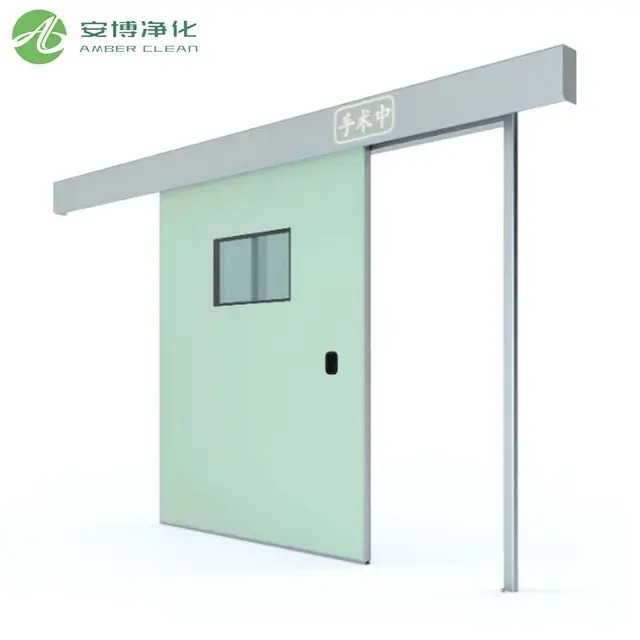
Technically, it's possible to retrofitted industrial doors with seals, coatings, or even automation—but this is rarely ideal. Industrial doors lack the fundamental cleanability, structural sealing, and contamination control required for certified cleanroom use. Instead of retrofitting, investing in purpose-built cleanroom doors is a more reliable, compliant, and long-term solution.
Cleanroom doors play a critical role in maintaining ISO, GMP, and FDA compliance. Their materials, sealing capability, and traceable access control support both quality assurance and audit-readiness. Poor door design can lead to pressure loss, particle infiltration, or microbial risks—all of which jeopardize certification and process integrity.
When properly maintained, a cleanroom door can last 15–20 years, thanks to corrosion-resistant finishes, smooth operation, and impact-resilient design. Regular inspections, cleaning, and lubrication are recommended to ensure maximum lifespan and performance.
In environments where the slightest contamination can cause product recalls or life-threatening consequences, the role of cleanroom doors is undeniably critical. They are not just barriers but engineered access systems designed to sustain cleanroom integrity, control air pressure, and maintain compliance with stringent standards.
In comparison, a regular industrial door—however robust—is simply not equipped to meet the demands of a sterile or highly controlled environment.
If your facility deals with sensitive production, sterile research, or precision manufacturing, investing in proper cleanroom door systems isn't a luxury—it’s a necessity.
