
- All
- Product Name
- Product Keyword
- Product Model
- Product Summary
- Product Description
- Multi Field Search

Views: 195 Author: Site Editor Publish Time: 2025-08-26 Origin: Site


Cleanroom environments demand the highest levels of hygiene, air quality control, and contamination prevention. Among the many components that maintain these standards, cleanroom doors play a critical role. From pharmaceuticals to microelectronics, the type of door used can significantly influence a facility’s ability to meet cleanroom classification standards.
In this article, we explore the typical construction materials used in cleanroom doors, their features, applications, and associated requirements. Whether you're designing a new facility or upgrading an existing one, understanding the material makeup of cleanroom doors is essential for maintaining compliance and ensuring long-term durability.
Cleanroom doors are specialized barriers designed to maintain the controlled conditions of a cleanroom by regulating airflow, pressure differentials, and contamination ingress. Unlike standard commercial or industrial doors, these are engineered with anti-microbial surfaces, airtight seals, and low particle emission materials to comply with ISO and GMP standards.
Maintain positive or negative air pressure depending on room classification
Act as airflow barriers to control particle movement
Withstand frequent sanitation and chemical exposure
Provide rapid access without compromising cleanliness
Cleanroom doors are typically installed in airlocks, personnel entrances, gowning areas, and product transfer rooms, all of which require different degrees of cleanliness and pressure control.
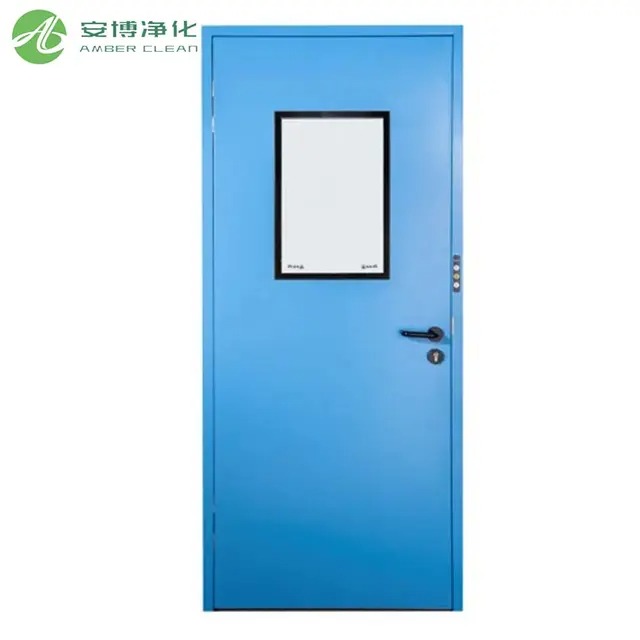
When selecting a cleanroom door, the choice of material is paramount. The right material determines not only durability but also compliance with strict cleanliness regulations. Below are the most common materials used in cleanroom doors, each with its unique set of benefits and limitations.
Stainless steel is one of the most prevalent materials used in cleanroom door manufacturing. Known for its exceptional resistance to corrosion, ease of cleaning, and non-porous surface, stainless steel is ideal for high-grade cleanroom applications such as pharmaceuticals, biopharmaceuticals, and semiconductor manufacturing.
Key Characteristics:
High-grade (typically SS304 or SS316) for increased corrosion resistance
Smooth, weld-free finishes to prevent bacterial accumulation
Tolerant to frequent disinfection and chemical exposure
Long lifespan with minimal degradation
Why It’s Preferred:
Stainless steel offers low particle shedding, robust structural integrity, and aesthetic appeal—especially critical in cleanrooms where visual inspections are part of the compliance process.
High-Pressure Laminate, or HPL, is widely used in cleanroom doors for ISO Class 5-8 environments. Made by fusing multiple layers of resin-impregnated paper under high pressure and temperature, HPL doors offer excellent impact resistance, chemical tolerance, and color customization.
Key Characteristics:
Lightweight yet strong
Available in antimicrobial and anti-static finishes
Resists scratching and moisture absorption
Easier to install compared to metal doors
Use Cases:
HPL doors are ideal for gowning rooms, laboratories, and food-grade environments, where frequent cleaning and visual cleanliness are essential but extreme chemical resistance is not required.
Powder-coated galvanized steel offers a balance between durability and cost. The galvanization layer provides corrosion protection, while the electrostatic powder coating offers additional resistance to chemicals and abrasion.
Key Characteristics:
Resistant to rust, humidity, and cleaning agents
Available in a variety of colors and finishes
Less expensive than stainless steel
Moderate particle resistance
Ideal Applications:
This material is frequently used in ISO Class 7-8 cleanrooms, such as automotive paint shops, packaging areas, and storage rooms, where heavy-duty performance is needed but microbial control is less stringent.
Glass is commonly used as an insert or full panel in cleanroom doors to allow visual inspection and light transmission. However, not all glass is suitable. In cleanroom applications, only tempered or laminated safety glass is used, often with antistatic and anti-shatter films.
Key Characteristics:
Offers excellent visibility while maintaining barriers
Can be treated with anti-static and UV-blocking coatings
Integrated into double-leaf or sliding doors
Resistant to scratching and disinfectants
Where It Fits Best:
Glass components are essential for monitoring environments, such as compounding pharmacies, IVF labs, and clean zones requiring visual access.
For flexible cleanroom areas or modular cleanroom systems, materials like polycarbonate and PVC are used. These are not as durable as stainless steel or HPL but are valued for their lightweight construction, flexibility, and cost-effectiveness.
Key Characteristics:
Transparent or translucent
Resistant to chemical splashes
Can be used in strip doors or flexible curtains
Easy to clean but may scratch over time
Best Used For:
Low-traffic or secondary clean areas, such as material pass-throughs, cleanroom curtains, and temporary setups.
In addition to material, cleanroom doors must meet certain regulatory and performance standards. These include ISO 14644, GMP Annex 1, and FDA cleanroom guidelines. Compliance requires more than material selection—it involves design, installation, and function.
| Feature | Description |
|---|---|
| Seamless Edges | No joints to trap particles or bacteria |
| Flush Glazing | Glass panels are level with the frame to minimize dust |
| Air-Tight Seals | Prevents particle transfer between zones |
| Smooth Surface Finishes | Enables rapid and thorough cleaning |
| Self-Closing or Automated | Enhances hygiene and traffic flow |
| Pressure Resistance | Supports positive or negative room pressure requirements |
These features work together to ensure sterility, reduce the risk of cross-contamination, and facilitate easy maintenance in regulated environments.
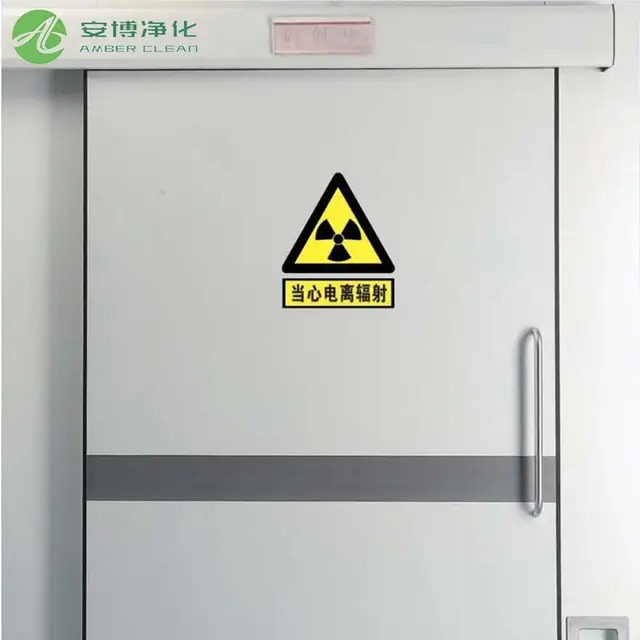
Yes, many cleanroom doors are built to be fire-rated for 30, 60, or 90 minutes. Fire-rated cleanroom doors typically use core materials like mineral wool or gypsum, sandwiched between stainless steel or powder-coated steel panels.
Absolutely. Cleanroom doors can be tailored for size, color, access control systems, window inserts, and automation depending on the specific facility requirements.
Regular cleaning with approved disinfectants, checking seals, and inspecting hinges or automatic mechanisms are standard. Maintenance frequency depends on traffic levels and cleanroom class.
Most cleanrooms use a mix of hinged doors, sliding doors, and high-speed roll-up doors, depending on the location and use-case scenario.
Here’s a side-by-side comparison of the most commonly used cleanroom door materials:
| Material | Durability | Cleanability | Chemical Resistance | Cost | ISO Class Suitability |
|---|---|---|---|---|---|
| Stainless Steel | Excellent | Excellent | High | High | ISO 3-6 |
| HPL | Good | Very Good | Moderate | Medium | ISO 5-8 |
| Powder-Coated Steel | Good | Good | Moderate | Medium | ISO 6-8 |
| Tempered Glass | Moderate | Good | Moderate | High | ISO 5-8 |
| Polycarbonate/PVC | Fair | Moderate | Low | Low | ISO 7-8 |
Choosing the correct cleanroom door material isn’t just about aesthetics or cost—it's a strategic decision that influences regulatory compliance, operational efficiency, and long-term performance. Each cleanroom has unique requirements based on its industry, ISO classification, traffic volume, and chemical exposure level.
For high-risk environments, stainless steel remains the gold standard.
For moderate traffic zones, HPL or powder-coated steel may offer the best value.
For light-duty areas or visual access points, glass and polycarbonate are ideal.
Ultimately, the best approach is to work with your cleanroom engineer or facilities planner to select a door system that balances functionality, durability, cleanliness, and cost.
